
Metabolic · Apple cider vinegar revisited — modest postprandial effect
Chronic disease · Long COVID + low-dose naltrexone — pilot data
Women's health · Searches for perimenopause + magnesium up 62% YoY
Chronic disease · Fibromyalgia + CoQ10 trial shows fatigue reduction
Hormones · Why your thyroid panel needs a Free T3, not just TSH
Mental health · Magnesium glycinate searches +38% MoM for anxiety
Mental health · L-theanine + caffeine: focus without the jitters
Metabolic · 30g protein at breakfast = stable AM glucose
Chronic disease · Autoimmune flare patterns track with sleep debt
Hormones · Progesterone + sleep architecture — new sleep-lab findings
Mental health · TikTok trend #dopaminemenu hits 320M views
Hormones · Adaptogens under review: ashwagandha + cortisol data
Metabolic · CGM data: walking 10 min post-meal cuts glucose spike 22%
Hormones · Cortisol awakening response: what a healthy curve looks like
Metabolic · Fasting insulin > 10 µIU/mL flagged as early IR marker
Chronic disease · 5 evidence-backed swaps for chronic inflammation
Gut · Polyphenols + butyrate — new mechanism paper
Gut · SIBO testing: lactulose breath test gains clinical traction
Women's health · Luteal-phase protein target: 1.2g/kg for cycle stability
Gut · TikTok trend #fiberMaxxing crosses 180M views
Mental health · Morning sunlight 10 min linked to better sleep onset
Metabolic · Berberine vs metformin — new meta-analysis on A1C
Women's health · TikTok trend #cycleSyncing crosses 480M views
Mental health · Gut-brain axis: psychobiotics trial shows mood lift
Energy · Mitochondrial support: CoQ10 + PQQ pairing trends up
Hormones · TikTok trend #cortisolcocktail crosses 240M views
Gut · 30 plants/week rule outperforms single-strain probiotics
Hormones · DHEA-S decline linked to midlife energy crash
Mental health · Omega-3 EPA > 1g/day shows antidepressant signal
Women's health · Endometriosis + omega-3 trial shows pain score drop
Women's health · Inositol 40:1 shows insulin sensitivity gains in PCOS
Energy · Creatine 5g/day — cognitive + fatigue benefits in women
Women's health · Iron + vitamin C pairing cuts fatigue in menstruating adults
Chronic disease · Hashimoto's: selenium 200mcg lowers TPO antibodies
Chronic disease · Type 2 remission rates with continuous low-carb
Energy · Ferritin under 50 ng/mL flagged in fatigue work-ups
Metabolic · Time-restricted eating: 10-hr window shows best adherence
Energy · B12 + methylfolate combo for MTHFR variants
Metabolic · Apple cider vinegar revisited — modest postprandial effect
Chronic disease · Long COVID + low-dose naltrexone — pilot data
Women's health · Searches for perimenopause + magnesium up 62% YoY
Chronic disease · Fibromyalgia + CoQ10 trial shows fatigue reduction
Hormones · Why your thyroid panel needs a Free T3, not just TSH
Mental health · Magnesium glycinate searches +38% MoM for anxiety
Mental health · L-theanine + caffeine: focus without the jitters
Metabolic · 30g protein at breakfast = stable AM glucose
Chronic disease · Autoimmune flare patterns track with sleep debt
Hormones · Progesterone + sleep architecture — new sleep-lab findings
Mental health · TikTok trend #dopaminemenu hits 320M views
Hormones · Adaptogens under review: ashwagandha + cortisol data
Metabolic · CGM data: walking 10 min post-meal cuts glucose spike 22%
Hormones · Cortisol awakening response: what a healthy curve looks like
Metabolic · Fasting insulin > 10 µIU/mL flagged as early IR marker
Chronic disease · 5 evidence-backed swaps for chronic inflammation
Gut · Polyphenols + butyrate — new mechanism paper
Gut · SIBO testing: lactulose breath test gains clinical traction
Women's health · Luteal-phase protein target: 1.2g/kg for cycle stability
Gut · TikTok trend #fiberMaxxing crosses 180M views
Mental health · Morning sunlight 10 min linked to better sleep onset
Metabolic · Berberine vs metformin — new meta-analysis on A1C
Women's health · TikTok trend #cycleSyncing crosses 480M views
Mental health · Gut-brain axis: psychobiotics trial shows mood lift
Energy · Mitochondrial support: CoQ10 + PQQ pairing trends up
Hormones · TikTok trend #cortisolcocktail crosses 240M views
Gut · 30 plants/week rule outperforms single-strain probiotics
Hormones · DHEA-S decline linked to midlife energy crash
Mental health · Omega-3 EPA > 1g/day shows antidepressant signal
Women's health · Endometriosis + omega-3 trial shows pain score drop
Women's health · Inositol 40:1 shows insulin sensitivity gains in PCOS
Energy · Creatine 5g/day — cognitive + fatigue benefits in women
Women's health · Iron + vitamin C pairing cuts fatigue in menstruating adults
Chronic disease · Hashimoto's: selenium 200mcg lowers TPO antibodies
Chronic disease · Type 2 remission rates with continuous low-carb
Energy · Ferritin under 50 ng/mL flagged in fatigue work-ups
Metabolic · Time-restricted eating: 10-hr window shows best adherence
Energy · B12 + methylfolate combo for MTHFR variants
Mental Wellness 7 min read

The Gut-Brain Axis: How Your Microbiome Shapes Mood & Mind

The intricate communication network between your gut and brain, known as the gut-brain axis, is increasingly recognized for its pivotal role in mental health. This article explores how your gut microbiome influences mood, stress response, and overall cognitive function.

MM

Modern Metabolic EditorialReviewed by licensed healthcare professionals

Editorial Team

Medically reviewed by Modern Metabolic Editorial Team

Jun 12, 2026

Clinically reviewed

Modern Metabolic Editorial Team

Last reviewed

June 12, 2026

Evidence base

Editorial standards applied

The Gut-Brain Axis: How Your Microbiome Shapes Mood & Mind

Gut-brain axis: The Unseen Connection: Your Gut and Your Mood

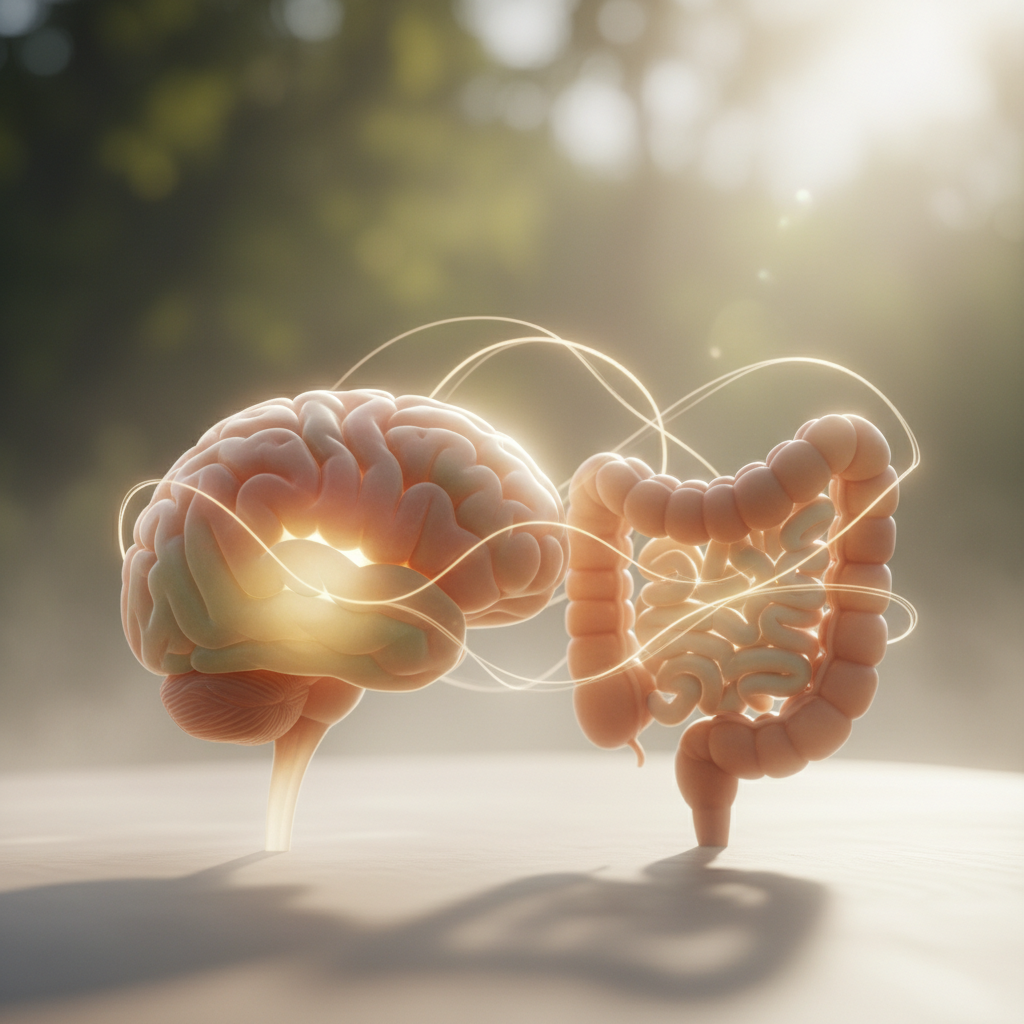
It might seem surprising, but the bustling community of microorganisms in your gut—your microbiome—has a profound impact on how you feel and think. This isn't just a feeling; it's a complex biological reality known as the gut-brain axis. This bidirectional communication highway constantly transmits signals between your digestive system and your brain, influencing everything from stress responses to emotional regulation.

What is the Gut-Brain Axis?

The gut-brain axis is a sophisticated communication system involving the central nervous system (brain and spinal cord), the enteric nervous system (a mesh-like system of neurons that governs the function of the gastrointestinal tract), and the gut microbiome. These systems communicate through various pathways, including the vagus nerve, immune system, and production of neurochemicals.

For instance, the vagus nerve acts like a superhighway, transmitting signals directly between the gut and the brain. Simultaneously, your gut microbes produce neurotransmitters, such as serotonin and GABA, which are identical to those found in the brain and play crucial roles in mood regulation. While most of these gut-produced neurotransmitters don't directly cross the blood-brain barrier, they can influence brain function indirectly and signal through the enteric nervous system.

How Gut Microbes Influence Your Mental Well-being

The composition and diversity of your gut microbiome can significantly impact your mental state. An imbalance, often called dysbiosis, is increasingly linked to various mood-related challenges.

Neurotransmitter Production

Roughly 90% of the body's serotonin, a key neurotransmitter involved in mood, sleep, and appetite, is produced in the gut. While not all gut-produced serotonin directly reaches the brain, its systemic presence can influence pathways that communicate with the central nervous system. Gut bacteria also produce gamma-aminobutyric acid (GABA), a calming neurotransmitter, and short-chain fatty acids (SCFAs) like butyrate, which have anti-inflammatory effects and can cross the blood-brain barrier to directly influence brain function and neuronal health.

Modulating Inflammation

Chronic low-grade inflammation is a known contributor to mood disorders. The gut microbiome plays a critical role in regulating systemic inflammation. A healthy, diverse microbiome helps maintain the integrity of the gut lining, preventing inflammatory compounds from leaching into the bloodstream. Conversely, an imbalanced microbiome can lead to increased gut permeability ("leaky gut"), triggering an immune response that can affect brain health and mood.

Impact on Stress Response

Your gut microbes can also influence your body's stress response system, specifically the hypothalamic-pituitary-adrenal (HPA) axis. Research suggests that a healthy microbiome can help regulate cortisol, the primary stress hormone, leading to a more balanced and resilient response to stressors. In times of stress, the gut microbiome can be altered, sometimes leading to a less diverse and more inflammatory profile, further perpetuating the stress cycle.

Nurturing Your Microbiome for Better Mood

Understanding the gut-brain connection empowers us to take proactive steps to support both our gut health and mental well-being. It's about creating an environment where beneficial microbes can thrive.

Dietary Strategies

Diet is perhaps the most powerful tool for shaping your microbiome. Emphasize a diverse range of whole, unprocessed foods. Prebiotic-rich foods—such as garlic, onions, leeks, asparagus, and oats—feed beneficial gut bacteria. Probiotic-rich foods, like fermented options such as yogurt, kefir, sauerkraut, kimchi, and kombucha, introduce live beneficial bacteria into the gut.

Aim for a variety of plant-based foods, including plenty of colorful fruits and vegetables, legumes, nuts, and seeds. These provide diverse fibers and polyphenols that nourish a healthy gut ecosystem.

Lifestyle Considerations

Beyond diet, lifestyle factors significantly impact the gut microbiome and, by extension, your mood. Regular physical activity has been shown to increase microbial diversity. Adequate sleep is crucial, as sleep deprivation can negatively alter gut flora composition. Managing stress through techniques like meditation, yoga, or spending time in nature can also positively influence the gut-brain axis, breaking the negative feedback loop that stress can create between the gut and the brain.

The Role of Supplements (with caution)

While a food-first approach is ideal, certain supplements like targeted probiotics or prebiotics might be considered in some cases. However, it's essential to choose products backed by scientific research and, ideally, consult with a healthcare professional before adding supplements, as not all strains are created equal, and individual needs vary. This is especially true as the science of the microbiome is still rapidly evolving.

Bottom line

The intricate connection between your gut microbiome and your mental health is a fascinating and increasingly well-understood area of science. By nurturing a diverse and balanced gut ecosystem through smart dietary choices and supportive lifestyle habits, you can positively influence your mood, resilience to stress, and overall cognitive well-being. Remember, this information is for educational purposes only and not a substitute for professional medical advice. Always consult with a qualified healthcare provider for any health concerns or before making any decisions related to your health and treatment.

Editorial Review: This article has been reviewed by the Modern Metabolic editorial team for accuracy and alignment with our evidence-based editorial guidelines.

#gut health#microbiome#mood#mental wellness#gut-brain axis#stress#neurotransmitters#inflammation

People also ask

What is the gut-brain axis?+

The gut-brain axis is a bidirectional communication system between your digestive system and your brain. It involves neural, hormonal, and immune pathways that allow your gut and brain to constantly exchange information, influencing mood, cognition, and overall well-being.

How do gut bacteria influence mood?+

Gut bacteria produce various neurochemicals, including serotonin and GABA, which are crucial for mood regulation. They also influence inflammation and the body's stress response, all of which can profoundly impact mental health and emotional balance.

What foods support a healthy gut-brain axis?+

To support a healthy gut-brain axis, focus on a diet rich in diverse whole foods. Include prebiotic-rich foods like garlic and asparagus, and probiotic-rich fermented foods such as yogurt and sauerkraut, along with a wide variety of fruits, vegetables, and fiber-rich plants.

Can stress affect my gut microbiome?+

Yes, chronic stress can significantly alter the composition and diversity of your gut microbiome, potentially leading to dysbiosis. This, in turn, can create a negative feedback loop, further impacting your mood and stress response.

MM

Written by

Modern Metabolic EditorialReviewed by licensed healthcare professionals

Editorial Team

The Modern Metabolic editorial team is composed of experienced editors and reviewed by licensed healthcare professionals. We publish evidence-informed wellness education — not medical advice. Independently reviewed by Modern Metabolic Editorial Team.

Share this story

Affiliate disclosure: some links on this page are affiliate links. Modern Metabolic may earn a commission at no extra cost to you. We only feature products independently reviewed by our editors. This is not medical advice.

Discussion

(0)

Loading…

The Metabolic Brief

One smarter wellness email every Tuesday.

Join 48,000+ readers getting the research, trends, and editor-vetted products that actually move the needle on metabolic health. Editor-reviewed. Zero fluff.

No spam. Unsubscribe anytime.

Continue reading